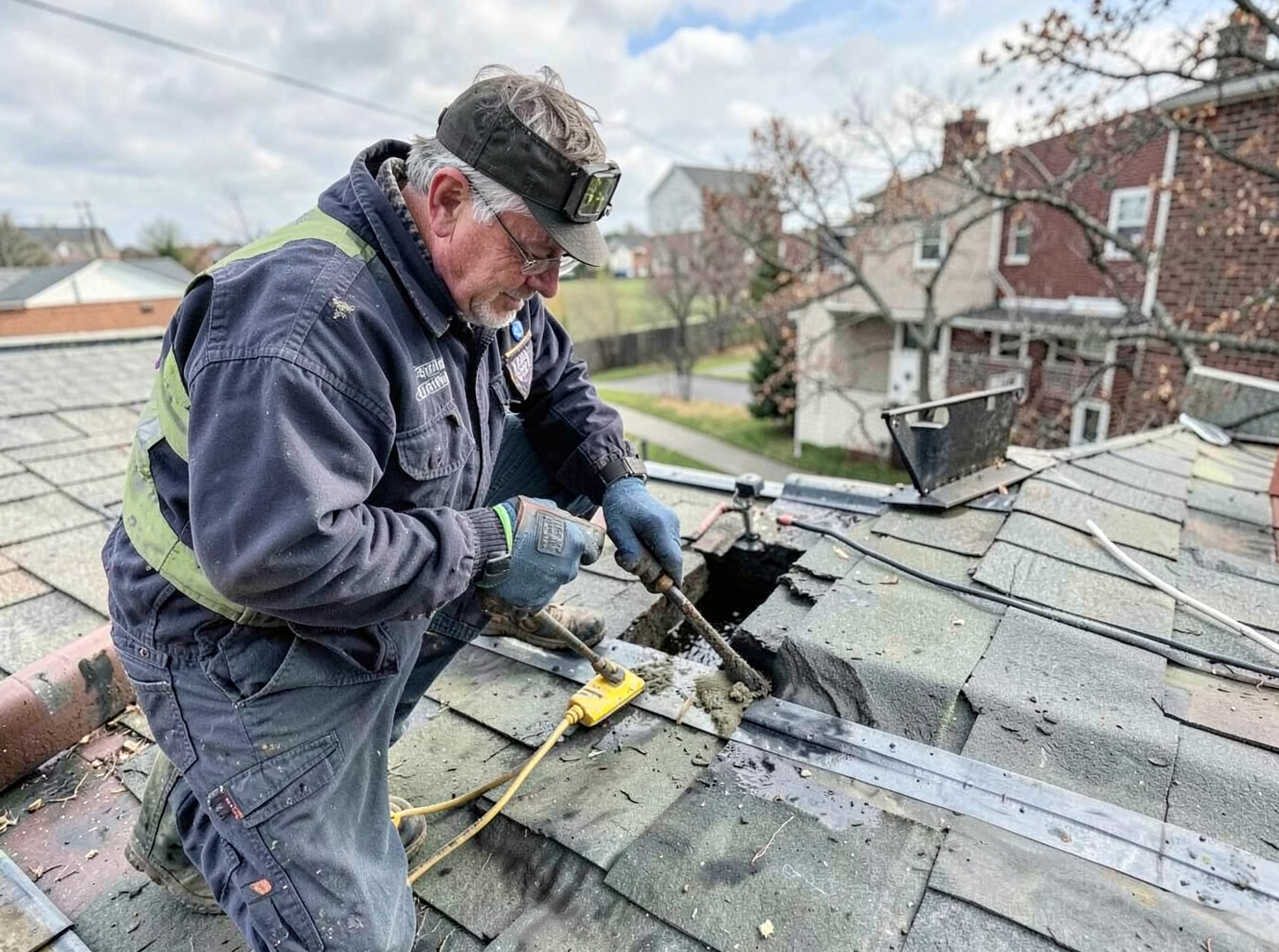
Woodbury homes built in the 1980s through early 2000s in Central Woodbury and Tannerwood often have asphalt shingle roofs that develop leaks at valleys and plumbing vents after repeated freeze-thaw cycles. Cold winters bring ice dams that force water under shingles, while warm summer storms push water through aged flashing around chimneys and skylights. Washington County building practices from that era left many roofs with minimal underlayment, so a small breach can reach interior ceilings within hours once snow melts or heavy rain hits.
Emergency calls frequently come from streets near Woodbury Village and Tannerwood Park where mature trees drop debris that clogs gutters and creates standing water against the roof edge. We carry temporary tarps, ice-melt products, and self-adhering membrane rolls sized for quick deployment on two-story homes common in these neighborhoods. St. Paul and Cottage Grove crews sometimes share overflow calls when storms hit the entire east metro, so we prioritize leaks actively dripping into living spaces first.
Before any permanent work we document existing conditions with photos and check attic insulation levels, because added heat loss in older Tannerwood houses accelerates ice dam formation. Repairs focus on restoring the existing drainage plane rather than full replacement unless multiple layers already exist. We schedule follow-up inspections after the next heavy rain to confirm the fix holds under real Washington County weather.
Technician insight
In Woodbury the thing that catches most people out with Emergency Roof Leak Repair is how quickly ice dams form on the north-facing slopes of 1990s Tannerwood homes that still have original R-19 attic insulation. Once the dam melts, water travels under the shingles and shows up two rooms away from the actual breach, so we always start the trace in the attic rather than assuming the wet spot on the ceiling is the entry point.
Central Woodbury Ice Dam Leak
Water began dripping from a second-floor ceiling near Tannerwood Park after a January thaw. We found a six-foot ice dam along the north valley that had forced water under the shingles and down the felt. We removed the ice, installed self-adhering membrane over the valley, and added a short section of heat cable. No further interior moisture appeared after the next snowfall.
Emergency Roof Leak Repair Services We Offer
✓Ice Dam Leak Response
Remove ice buildup and install heat cable or membrane to stop water intrusion on Central Woodbury and Tannerwood roofs during winter thaws.
✓Valley Flashing Emergency Repair
Replace or reseal metal valleys where debris and freeze-thaw cycles allow water to enter homes near Woodbury Village.
✓Plumbing Vent Boot Replacement
Install new rubber or lead boots around vent pipes that crack from temperature swings common in Washington County winters.
✓Chimney Cricket and Flashing Fix
Repair or rebuild cricket and step flashing around masonry chimneys to prevent leaks after summer storms.
✓Gutter and Downspout Overflow Stop
Clear and re-pitch gutters near Tannerwood Park to eliminate water backup that pushes under shingles during heavy rain.
Emergency Roof Leak Repair Cost in Woodbury, MN
| Service | Typical Range | What Affects It |
|---|---|---|
| Emergency inspection and temporary seal | $150–$350 | Higher when roof access requires ladders over two stories or ice removal. |
| Ice dam removal and membrane | $400–$900 | Depends on linear feet of dam and whether heat cable is added. |
| Valley or flashing repair | $300–$700 | Varies with length and whether underlying decking needs replacement. |
| Vent boot or cricket replacement | $250–$550 | Single vent versus multi-flue chimney work changes scope. |
Ranges are typical for Woodbury, MN and confirmed with an exact written quote before any work starts.
How it works
- 1
Phone Assessment
Gather roof age, leak location, and current weather details while confirming we can reach the property same day or next morning.
- 2
On-Site Inspection
Climb to the attic and roof to trace water paths, note shingle condition, and identify whether ice dams or flashing failure is the source.
- 3
Temporary Containment
Apply tarps, sealants, or membrane patches to stop active dripping into living areas before permanent materials are installed.
- 4
Permanent Repair
Replace damaged flashing, boots, or shingles and verify drainage so the fix withstands the next freeze-thaw or thunderstorm cycle.
- 5
Final Walk-Through
Review photos with the homeowner, explain any follow-up monitoring needed after the next significant rain or snow melt.
Pricing
Upfront quotes given after inspection during posted business hours.